
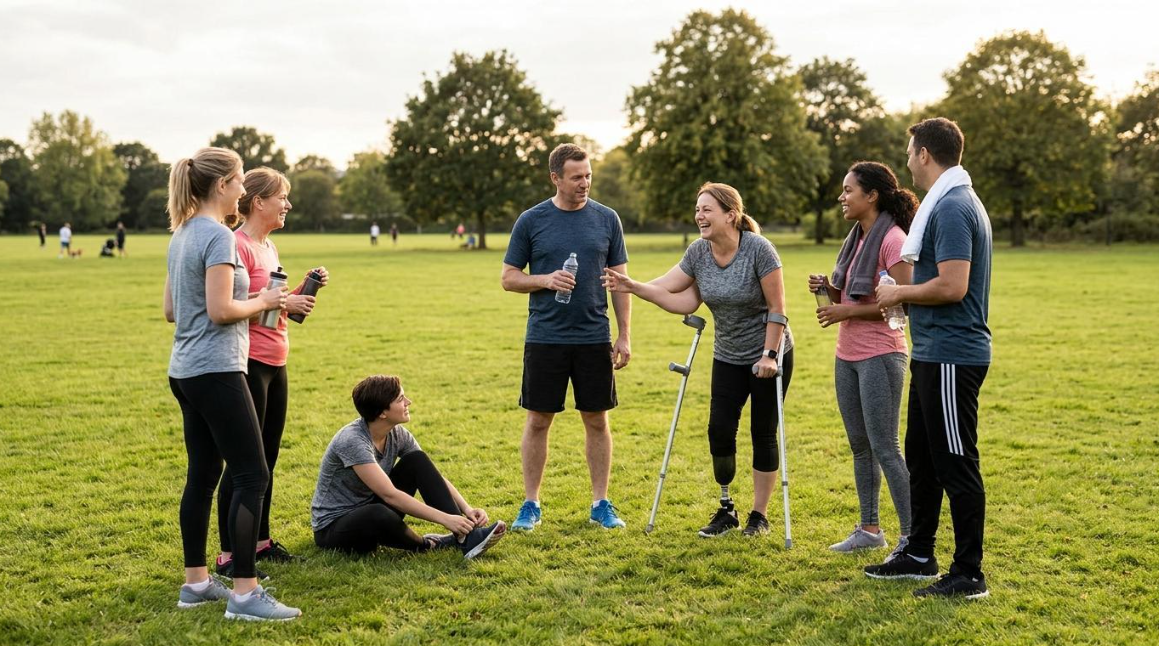
20 Oct Running an Inclusive Company Sports Program? Learn how.
A company sports program can build friendships across departments, lift morale and give people a reason to step away from their desks. It can also leave some colleagues feeling like spectators in their own workplace. The difference usually comes down to planning. HR teams that think about who might be left out, before the first whistle, tend to build programs that more people actually want to join.
This guide walks through the decisions that matter most: finding out what employees want, keeping participation optional, welcoming mixed skill levels, offering accessible alternatives, choosing workable times, sorting out venues and kit, and listening once the season starts.
Gauge Employee Interest Before Choosing Activities
It’s tempting to pick a sport the organizer loves and announce a sign-up date. Resist that. A short survey or a few informal conversations will tell you far more about what your workforce would enjoy, and which activities they’d never consider.
Ask open questions. What kinds of movement do people enjoy? What would make them hesitate? Which days and times are realistic? Let people suggest ideas you hadn’t thought of, such as walking groups, table tennis or low-key recreational leagues alongside team sports.
Surveys also send a signal. When employees see that their input shaped the program, they’re more likely to feel it belongs to them rather than being handed down from above. Employee input drives impact, and it helps you spot gaps early, before money and goodwill are spent on an activity few people want.
Useful ways to learn what employees want include:
- Short anonymous surveys
- Informal conversations with team leads
- Open suggestion boxes or forms
- Quick polls on preferred days and times
Keep Participation Voluntary and Pressure-Free
A sports program should be an invitation, not an expectation. Employees have different health conditions, family commitments, comfort levels and reasons for staying out of group activities, and they shouldn’t have to explain themselves.
Communicate clearly that joining is optional and that choosing not to join carries no consequence for evaluations, promotions or how colleagues are regarded. Avoid language that frames participation as a sign of commitment or team spirit. Be careful too with incentives and leaderboards, because rewards can quietly turn an optional activity into a pressured one.
Keep health information out of it. Organizers shouldn’t ask people why they’re opting out or request medical details to join. If an employee chooses to share something about accessibility needs, handle it privately and respectfully. Where questions arise about incentives or medical information, check with your legal or benefits advisers, since rules can apply to wellness programs.
Welcome Mixed Experience Levels
A company league often includes a former college athlete beside someone who hasn’t touched a ball since school. If the program only suits the confident, the beginners will quietly drop out, and they’re often the people who’d benefit most from the social side.
One approach is to run more than one format. A relaxed session focused on learning and fun can sit alongside a more competitive option, and people can move between them as their confidence grows. Mixed teams work well when organizers balance rosters rather than letting the strongest players pick each other.
Small rules help. Rotate positions, make sure everyone gets time on court, and keep scorekeeping light. Offer a short skills warm-up for newcomers, and let experienced players coach rather than criticize. Make the first session easy to enjoy, because a good first impression often decides whether someone returns.
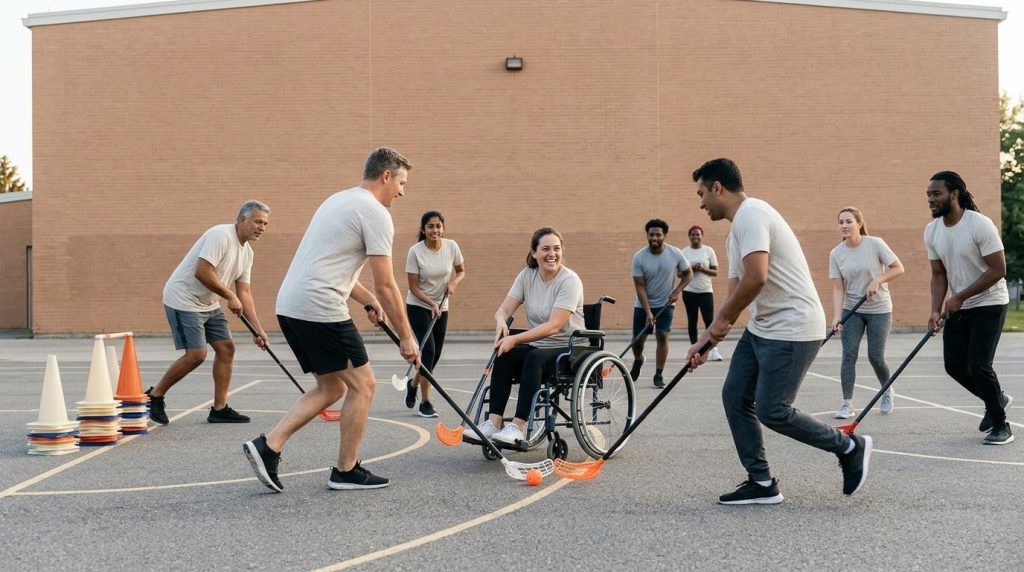
Alt text: Wheelchair user playing floor hockey with teammates on outdoor school court
Offer Accessible Alternatives for Different Abilities
Inclusion means designing the program so employees with different abilities can take part in a meaningful way. That includes physical disabilities, chronic conditions, sensory needs, and anyone who simply can’t do a particular activity. If you know a specific employee may need an accommodation, a private one-on-one conversation is the right starting point.
Adapt the Activity Itself
Often small changes open the door. Slower pacing, modified rules, seated versions, shorter rounds or extra rest breaks can make a game workable for more people. Ask participants what would help rather than guessing, since needs vary even among people with similar conditions.
Provide Non-Playing Roles
Not everyone wants to play, and that’s fine. Coaching, scorekeeping, photography, organizing, refereeing or cheering from the sideline are real contributions. Offering these roles lets people stay connected to the team without feeling like a lesser member.
Check Venue Access Needs
Before confirming a location, think through step-free entry, accessible restrooms, seating, lighting and noise. Share this information in advance so people can decide with confidence rather than finding out on the day.
Consider these ways to widen participation:
- Modified rules or slower pacing
- Seated or lower-impact versions
- Scorekeeping, coaching or refereeing roles
- Advance information about venue access
- Extra rest breaks during sessions
Schedule Sessions Around Real Work Patterns
A lunchtime game suits office staff but may shut out shift workers, remote employees or anyone with caregiving duties after hours. Look at how your teams really work, then offer sessions at more than one time if you can.
Early mornings, lunch breaks and early evenings each reach different people. Rotating the schedule across a season gives everyone a fair chance to attend. Publish dates well ahead, and keep the commitment flexible, so missing a week doesn’t mean losing a place.
Decide whether sessions happen on paid time or personal time, and be consistent. If only some departments can play during work hours, the program quietly favors them. Fairness here matters as much as the activity you choose.
| Good to Know: People rarely explain why they skip an event, so low attendance can mean many things: a clash with shift times, caregiving duties, cost worries or discomfort with the format. Before judging interest, ask which barriers exist. A quick, anonymous question about timing often reveals fixes that cost almost nothing. |
Arrange Venues and Team Kit Details
Venue and equipment choices shape who feels welcome. Settle them early, and be open about what the company will and won’t provide.
Choose an Accessible Location
Pick a place that’s easy to reach by public transport or with parking, and that has accessible entrances and facilities. A venue close to the workplace saves travel time, which helps people squeeze a session into a busy day.
Handle Equipment and Team Clothing Fairly
Don’t assume everyone owns suitable gear or wants to buy it. Lend balls, nets and other equipment where possible, and make team clothing optional. If the company supplies kit for a volleyball league, ask participants about fit and coverage preferences before ordering, since people differ in what they feel comfortable wearing on court. When you gather those preferences, look at volleyball shorts from Sports Gear Swag for a company team, which come in loose and compression fits. Letting people choose between styles, or wear their own comfortable activewear, keeps the focus on playing rather than on what anyone’s wearing. If costs are involved, set a clear rule so nobody feels singled out.
Plan for Weather and Backup Space
Outdoor sessions need a fallback. Line up an indoor space or a rescheduling plan, and tell participants how cancellations will be communicated.
Collect Participant Feedback and Adjust
A program shouldn’t be set in stone after launch. Ask participants, and people who chose not to join, what’s working and what isn’t. Short anonymous surveys help people speak freely, while quick chats after a session catch small issues before they grow.
Look at participation patterns too. Are certain departments, shifts or groups missing? That can point to scheduling, cost or comfort barriers. Qualitative comments matter just as much as attendance numbers, because a full roster doesn’t guarantee everyone is enjoying themselves.
Act on what you hear and tell people what changed. Even a small adjustment, shared openly, shows that feedback is taken seriously and encourages more honest responses next time.
Build a Program Employees Choose to Join
The most inclusive sports programs are shaped by the people they serve. Start by asking what employees want, keep joining entirely optional, make room for every skill level and ability, and schedule around real working lives. Then check in often and adjust. If you take those steps in order, you’ll have a program people choose for themselves, and that’s the real measure of success.
No Comments